
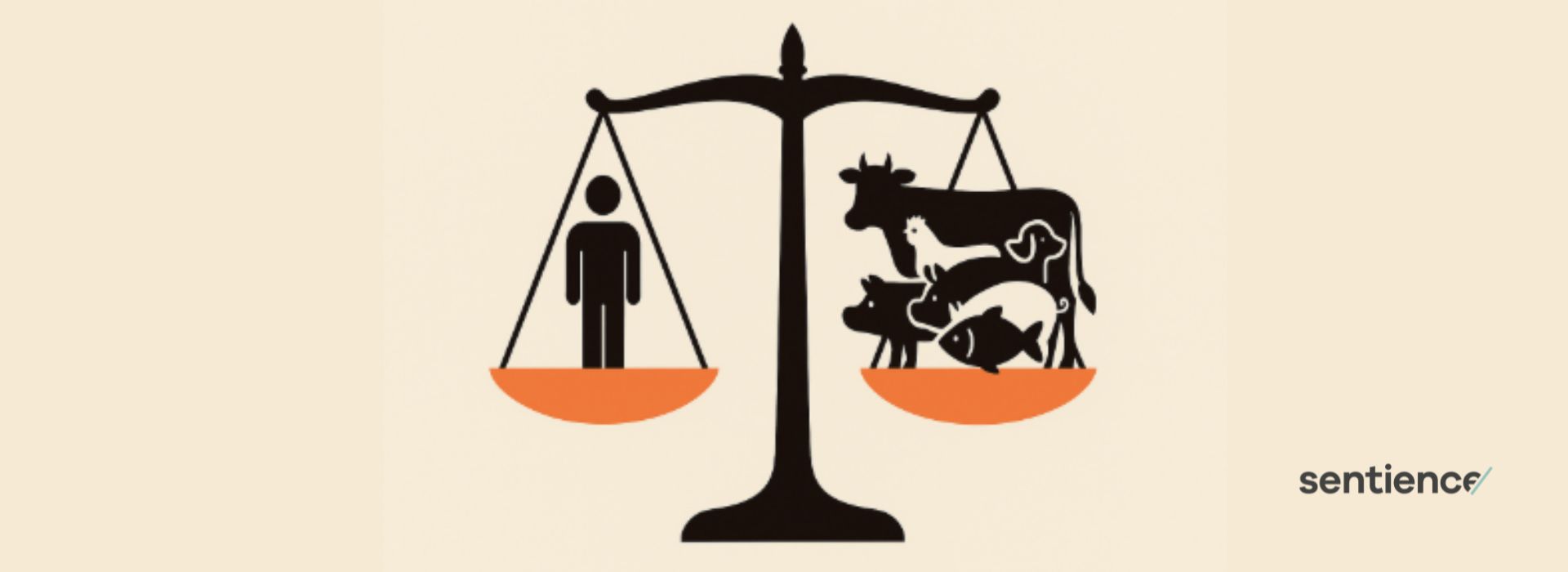
Why Politics Must Extend Beyond Our Own Species
Each year, the World Day for the End of Speciesism invites us to ask a simple, yet fundamental question: why do our laws, institutions and policies still revolve mostly around one species – our own? Despite what we now know about the capabilities of non-human animals – their sentience, their ability to feel pleasure and pain – most political systems operate focusing on humans. The result is a world where billions of individuals are exploited, confined and killed without any meaningful representation or recourse.
From Sentience to Politics
Whether it is a pig engaging in play, or a fish lending a helping fin, the evidence of their sentience is clear and unequivocal. Yet, sentience rarely grants animals any political or legal standing. Their suffering remains invisible to the systems that shape our societies. This is not just a moral oversight – it is a political blind spot. Given that the concept of sentience plays a key role in much of our moral and legal reasoning, overlooking animals lacks justification.
Historically, humans have justified excluding animals from moral concern by appealing to traits like language or abstract thought. However, those traits have proven not to be uniquely human: many animals communicate, solve problems, or form social bonds. These capabilities do not address the real conditions of suffering that animals experience – such as chronic pain, behavioural disorders from confinement, or social deprivation.
Speciesism – the belief that belonging to the human species is enough to claim greater moral worth – has no rational basis. It is a form of discrimination, rooted not in reason, but rather in custom and convenience.
This systemic disregard affects billions of individuals. In intensive farming, land animals are treated as units of production (the so-called “large livestock units”), rather than considered as sentient beings with interests. In aquaculture, they are quantified in tonnes, rather than counted as individuals. None of this is due to non-human animals lacking moral value, but because our political structures do not take them enough into consideration.
This is why Sentience works to expand the scope of politics beyond the limits of our own species. We believe that a just society must consider the interests of all sentient beings.
A Tangible Step Towards Change: Ensuring Outdoor Access for All Farm Animals
Switzerland already has a strong legal foundation for treating animals as individuals: animal dignity is enshrined in the Federal Constitution, and it grants animals intrinsic value independent of human interests. Swiss law explicitly forbids causing pain, fear, or deprivation to animals when it has not been justified. That makes our upcoming initiative to guarantee outdoor access for all farm animals in Switzerland both natural and urgent. It is a necessary step to translate, consequently, constitutional protection into real-world practices.
More than 80 million farm animals in Switzerland are raised in systems that deny their most basic needs – sunlight, fresh air and an open space to move. Amongst these 80 million farm animals, 78 million of them are chickens – their number nearly doubled over the past 20 years.
It is about more than welfare. It is about recognising that farm animals have interests that deserve political weight, and that policies must reflect that reality. The fight to end speciesism is not an abstract one; it is made up of countless actions – initiatives, campaigns, conversations, collaborations, policies, and more – that challenge the status quo and demand a broader vision of politics.
Tangible progress for animals can only occur when they are regarded not as products to exploit, but as political subjects worthy of consideration. Only by granting animals this moral and political visibility can we build a society that truly respects their lives.
Author

Similar articles
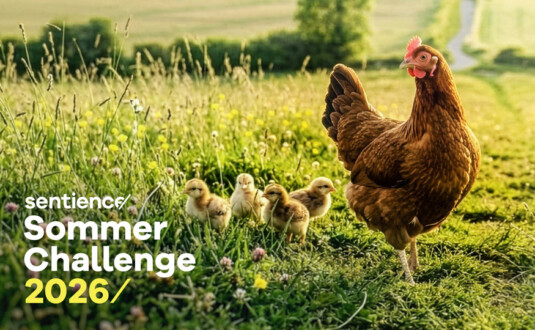
Thank you
Thanks to the Summer Challenge, we were able to mobilise key resources to effectively prepare the next decisive phase for millions of animals in Switzerland.
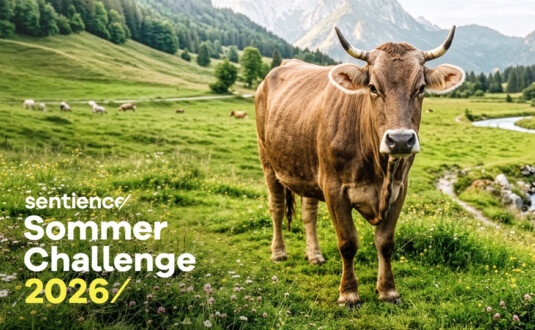
Projects 2026
From the Outdoor Access Initiative to retail work: key next steps are now being prepared.
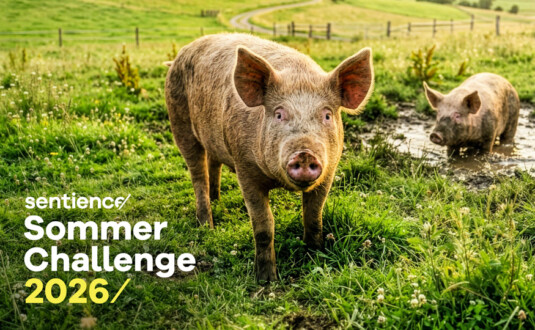
Start Summer Challenge
With the launch of the Outdoor Access Initiative, growing pressure on major retailers and further political projects, key decisions lie ahead. To ensure that we can fully seize this opportunity for animals, we are launching our Summer Challenge
Annual Report 2025
2025 was a dynamic year for Sentience, full of challenges and important progress for animals. Whilst advancing key projects, we also restructured much internally.

Thank you for your support ❤️
Together, we raised 123,556 CHF – successfully completing the Matching Challenge. Thanks to your support, we are entering the new year with a strong foundation. We thank you from the bottom of our hearts.
Outlook 2026
Next year’s programme promises to be exciting and full: outdoor access for farm animals, retail work, public procurement initiatives, and more. We look forward to continuing this journey with you, and we need your support to do so.
The Chicken Check: who leads and who lags?
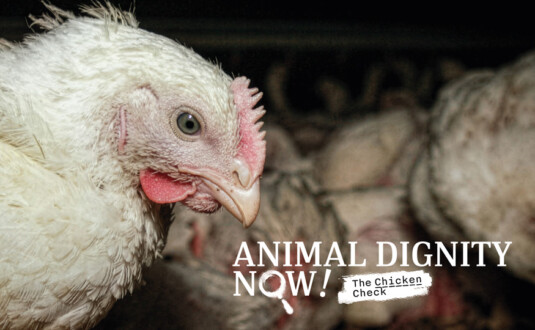
Over the past month, Sentience has published four reports that examine how the country’s largest retailers – Migros, Coop, Aldi, and Lidl – measure up against the ECC. Today, we bring those findings together in a single ranking...
It is not a question of how, it is a question of when
Coop: the final retailer in our “Chicken Check”. Improvements, transparency, labels,... all of this sounds great. But how well does Coop’s practices align with the European Chicken Commitment (ECC), a scientific framework designed to reduce the...
No comments yet