

Fish farming: the invisible crisis we can no longer ignore
For the World Day of the End of Fishing and Fish Farming, we are called to confront the hidden suffering of billions of fish, as well as the urgent need for a transformative approach to aquaculture.
Fish are amongst the most exploited animals on the planet. Yet, they remain largely invisible in discussions about animal welfare. In Switzerland alone, 5 million fish are raised in aquaculture systems every year. Globally, fish farming slaughters over 130 billion individuals annually. Despite these unfathomable numbers and the subsequent unnecessary suffering generated, fish receive far less attention compared to land animals in factory farming.
The sentience of fish: more than just a commodity
As a species, we often prioritize the protection of non-human animals that share more similarities with us, both physically and cognitively. Fish are foreign to us and therefore receive little attention. However, scientific evidence has repeatedly shown that fish are sentient beings capable of experiencing pain. Many aquatic species also exhibit signs of cooperation and altruism, along with various cognitive capacities, including the capacity for pleasure – particularly through playful behaviours. Given the growing evidence of fish sentience, it is essential that they receive the same level of protection as other vertebrates. It is misleading to claim that inherent moral value is determined by similarity to humans. Marine animals’ ability to suffer should not be diminished by our speciesist biases.
The sustainability crisis of fish farming
Fish farming is often presented as a sustainable alternative to overfishing, but the reality is far from environmentally friendly. Only about 40% of fish meat in Switzerland is deemed sustainable. Aquaculture contributes to habitat destruction, excessive antibiotic use, and significant water pollution. Additionally, farmed fish are often fed wild-caught fish, leading to further depletion of marine ecosystems. Our exploitation of aquatic species is unsustainable and calls for urgent reform.
Neglected, understudied and underprotected
Fish welfare remains an under-researched area, which leaves these animals vulnerable to immense suffering. Compared to mammals and birds, significantly fewer studies exist on their cognitive abilities and welfare needs. Despite being amongst the most exploited animals on the planet, the legal protection measures for fish remain weak. The lack of attention given to fish farming means fewer resources are allocated to research, regulation and enforcement.
Considering the vast number of individuals affected, targeted action in this area has the potential for a significant impact in reducing suffering. Addressing fish farming requires a shift in awareness, resource allocation, as well as policy intervention.
Rethinking our relationship with aquatic life: a path to change
Fortunately, plant-based alternatives to fish meat that offer a sustainable and cruelty-free alternative are emerging on the market. Investing in these solutions, alongside policy changes, can significantly reduce reliance on factory-farmed fish.
At Sentience, we are working to address this issue through our “Invisible Animals” Campaign, which sheds light on the suffering of overlooked animals like farmed fish.
By advocating for policy change and legislative reforms, supporting sustainable alternatives, and shifting consumer habits, we can move towards a future where fish are no longer considered as a commodity.
Make waves for fish
Just like the “Invisible Animals” Campaign, the World Day for the End of Fishing and Fish Farming raises awareness and brings visibility to the billions of fish suffering. Subscribe to our newsletter to keep up to date with our latest projects.
Author

Similar articles

Thank you for your support ❤️
Together, we raised 123,556 CHF – successfully completing the Matching Challenge. Thanks to your support, we are entering the new year with a strong foundation. We thank you from the bottom of our hearts.

Outlook 2026
Next year’s programme promises to be exciting and full: outdoor access for farm animals, retail work, public procurement initiatives, and more. We look forward to continuing this journey with you, and we need your support to do so.
2025 in Review
This year has shown what is possible when commitment and community come together. Discover what we achieved together – and how we will build on it.
In December, every donation counts twice
From now until the end of December, every donation will be matched by generous supporters – up to a total of 50,000 CHF. That means 10 CHF becomes 20 CHF, 50 CHF becomes 100 CHF.
Vague promises do not protect animals, transparency does
After examining Migros last week, Sentience is now turning the spotlight on Lidl to assess how well its practices align with the European Chicken Commitment (ECC), a scientific framework designed to reduce the suffering of broiler chickens...
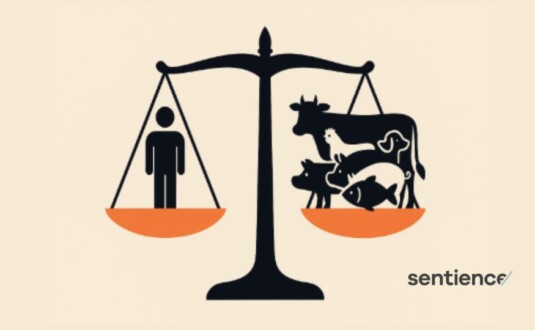
Why Politics Must Extend Beyond Our Own Species
Why do our laws, institutions and policies still revolve mostly around one species – our own?

From Overlooked to Unmissable: A Voice for Invisible Animals
Just over a year ago, we launched the “Invisible Animals” campaign. Through our petition – which we aimed to give a voice to pigeons, rats, bees and fish – we gathered 34,970 signatures.

When Science Meets Policy: A Milestone for Animal Sentience
The LSE is launching a pioneering Centre for Animal Sentience, led by Prof. Jonathan Birch. At Sentience, we welcome this vital step—proof that science and policy must meet to put the concept of sentience at the heart of decision-making.
No comments yet